
You've never done this before, and you're not sure what to expect — that's exactly why you searched "First Hair Salon Appointment Ever? Here's Everything You Need to Know." Maybe you've been cutting your own hair for years. Maybe someone finally convinced you to go. Either way, you're here, and that first-appointment anxiety is real. What do you say when you walk in? Will they judge your hair? What if you don't know the right words? At our Ann Arbor salon, we work with first-timers regularly — and the uncertainty you're feeling right now is something we recognize the moment someone walks through the door. This guide is built from those real conversations: what clients wish they'd known, what we wish we could tell every new guest before they arrived, and what actually makes the difference between leaving disappointed and leaving obsessed with your hair. By the time you finish reading, you'll know exactly what to do.
What to Expect When You Walk Into a Hair Salon for the First Time
Walking into a hair salon for the first time can feel a little overwhelming. You don't know where to stand. You're not sure what to say. And everyone around you seems to know exactly what they're doing — like they've been doing this forever. That feeling is completely normal, and it goes away fast once you know what's coming.
Here's the honest version of what actually happens when you walk through the door.
Most salons have a front desk or reception area right when you enter. Someone will greet you and check you in. If you made an appointment, they'll confirm your name and let your stylist know you've arrived. First visit? They may hand you a short intake form asking about your hair history and any sensitivities. Don't skip this part — it helps your stylist avoid anything that could irritate your scalp or damage your hair.
You'll usually wait a few minutes in a seating area. At many Ann Arbor salons, this is where you'll see style books, magazines, or a display of products. You don't have to buy anything. Nobody expects you to. It's just there if you're curious.
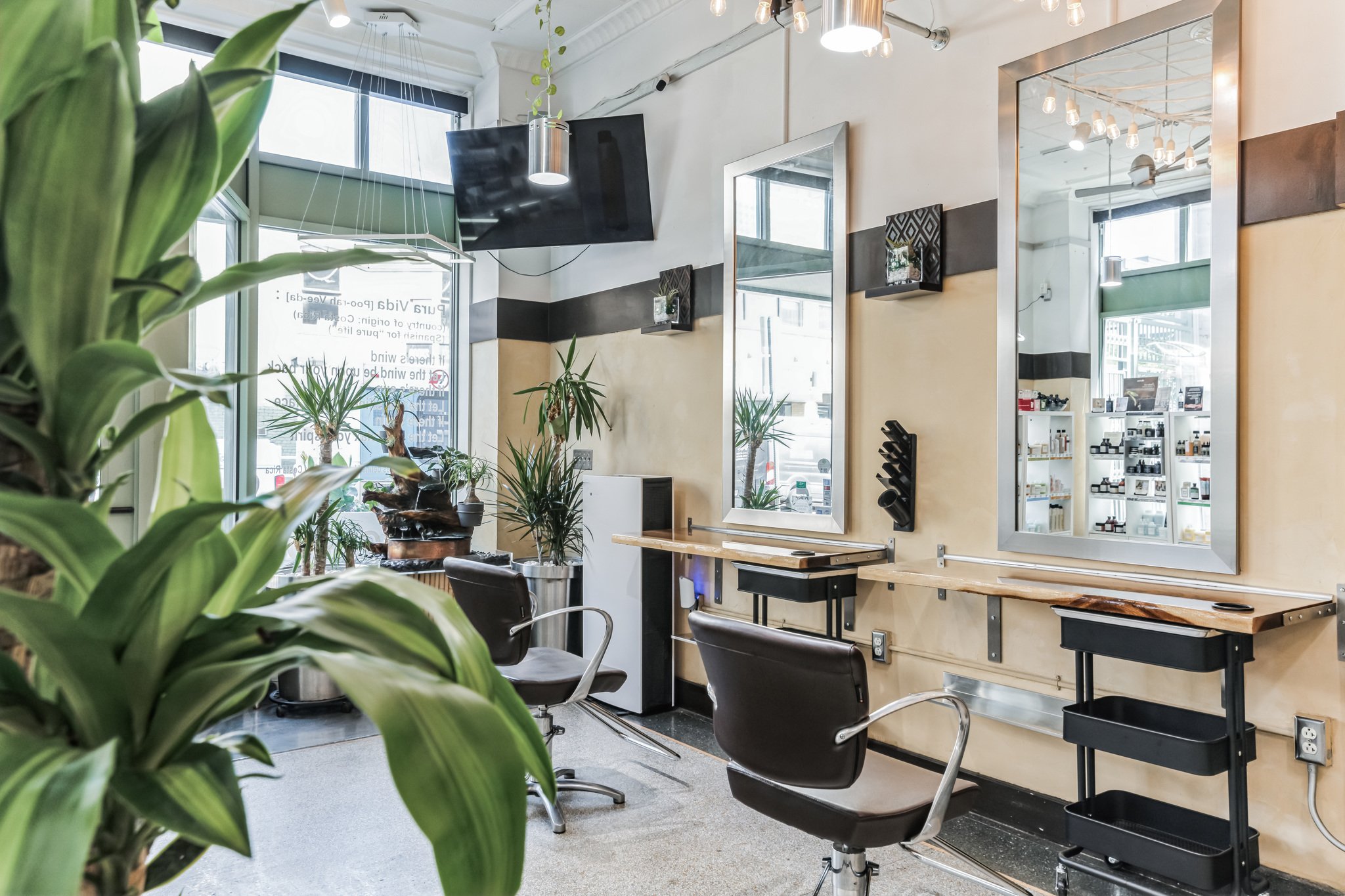
When your stylist is ready, they'll call your name and bring you to their station. Think: a chair, a mirror, a counter of tools. You'll sit down, and they'll drape a cape or apron over your clothes to protect them. Then the conversation starts — and this is the part most first-timers don't expect.
Your stylist is going to ask you questions. A lot of them. What are you hoping to get done today? How long has your hair been this length? Do you use heat tools at home? How often do you wash it? This isn't small talk. It's called a consultation, and it's one of the most important parts of the whole appointment.
We see this constantly — a client comes in with a photo of what they want, but they haven't mentioned they've been box-coloring their hair for two years. That changes everything. The consultation is where we catch that before it becomes a problem.
Be honest during the consultation. Tell your stylist if you've had any chemical treatments, if your hair breaks easily, or if you've had a bad experience at a salon before. The more they know, the better the result. There's no wrong answer here.
After the consultation, the service begins. Depending on what you're getting, you may be walked to a shampoo bowl first. This is a reclined sink where your stylist washes and conditions your hair before cutting or styling. Most people find this part surprisingly relaxing — the water pressure is gentle, and the scalp massage that comes with it is a real thing. Not just a rumor.
Back at the mirror, your stylist will begin cutting, coloring, or styling based on what you discussed. Talk during this time or stay quiet — both are completely fine. If something doesn't look right or you have a question, say so. Good stylists want your feedback while they're still working, not after.
The whole process moves faster than you think it will. A basic haircut at most salons takes 30 to 60 minutes from check-in to checkout. Color services run longer, sometimes two hours or more depending on the technique.
The checkout process is simple. You'll pay at the front desk, and many salons will offer to book your next appointment before you leave. You're not obligated to, but most stylists recommend coming back every six to eight weeks for a trim to keep your style looking fresh.
First visits are always a little awkward. But by the time you're back in the chair a second time, you'll know exactly what to expect — and that makes all the difference. If you're ready to stop wondering and just go for it, our {parent_keyword} page is a good place to start.
How to Prepare for Your First Salon Appointment Before You Go
Your first hair salon appointment can feel a little overwhelming — but most of that anxiety disappears the moment you walk in prepared. And "prepared" doesn't mean memorizing a hair glossary. It means showing up with a clear idea of what you want and a realistic sense of what your hair can actually do right now.
The single biggest thing most guides get wrong? They tell you to collect inspiration photos. Fine advice. But they skip the part that actually matters: bring photos of hair that looks like yours. Thick, curly hair doesn't behave like fine, straight hair. If you bring in a photo of someone with a completely different texture, your stylist has to spend half the consultation managing your expectations instead of talking about what's actually possible for you.
Pull three to five photos from Instagram, Pinterest, or even a Google image search. Look for people whose hair appears to match your texture and density. That gives your stylist something real to work with. We see this constantly — a client comes in with one photo, and once we talk through their hair type, we land on something even better than what they originally had in mind.
Before your appointment, take a close look at your hair at home. Is it color-treated? Has it been chemically relaxed or permed? These things change what services are safe for your hair on day one. Be ready to tell your stylist honestly — there's no judgment here. Stylists just need accurate information to do good work. A client seen last spring hadn't mentioned a box color treatment from two months prior. It changed the whole color plan, and we were glad she remembered to bring it up before mixing started.
Wash your hair the day before your appointment, not the morning of. Slightly dirty hair actually holds better during a haircut. Completely clean hair can be slippery and harder to work with, especially for dry cuts. If you're getting a color service, your stylist may have specific instructions — ask when you book.
Think about your lifestyle before you sit in the chair. How much time do you spend styling in the morning? Do you blow-dry every day, or mostly air-dry? Do you work outdoors? In Ann Arbor, we get real winters and humid summers — both of which affect how a style holds. A cut that looks great in a controlled salon environment might behave completely differently in February wind or August humidity. Your stylist can factor this in, but only if you mention it. Skilled stylists who build strong client relationships and deep local knowledge are often the ones who grow thriving salons over time — and that kind of expertise shows up in every consultation.
Wear a shirt you don't mind getting a little damp or having a cape draped over. Button-downs or zip-ups are ideal — easy to remove without disturbing your finished style. Avoid turtlenecks or anything you'd have to pull over your head after your hair is done.
If you take any medications that affect your hair — certain blood pressure medications, thyroid treatments, and chemotherapy drugs are known to change hair texture or cause loss, according to the American Academy of Dermatology — let your stylist know. This isn't oversharing. It's information that helps them choose the right products and techniques for you.
And one last thing worth saying plainly: you don't need to know the technical name for what you want. You don't need to know the difference between a razor cut and a point cut. That's your stylist's job. Your job is to show up with honest information about your hair, a few photos that feel right, and a clear sense of how much time you're willing to spend on maintenance. That's it. Everything else gets figured out together.
How to Talk to Your Stylist So You Get the Results You Actually Want
This is the part most people get wrong. They sit down in the chair, the stylist asks "what are we doing today?" — and they freeze. Or worse, they say "just a trim" when they actually want something completely different but don't know how to ask for it.
Here's what we see constantly at our Ann Arbor salon: clients who leave disappointed not because we did bad work, but because the conversation at the start never happened the way it needed to. Communication is the whole job. The technical skill matters — but it only works if we know what you're going for. Having guided hundreds of first-time guests through this exact moment, we've found that the right few questions up front change everything about the outcome.
Bring Photos — But Use Them the Right Way
Photos are your best tool. Pull three to five images of hair you like and show them before the service starts. But here's what most guides won't tell you: don't just show photos of what you want. Also show photos of what you don't want. That second stack tells your stylist just as much as the first one.
A client came in last spring with a photo of a very short pixie cut. She said she loved the "vibe." What she actually meant was she loved the texture and the way the layers moved — not the length at all. We asked a few questions and figured that out before a single cut was made. If she'd just handed over the photo without talking, she would have left with something she hated.
When you show a photo, say out loud what specifically you like about it. The color? The volume? The way it falls? Your stylist can work with specifics. "I like it" is hard to replicate. "I love how it's shorter in the back but still covers my ears" — now that gives us something real to work with.
Tell Your Stylist What Your Morning Looks Like
This matters more than most people think. A style that looks incredible in the salon can be a nightmare at home if it requires thirty minutes of blowdrying every morning. Tell your stylist honestly how much time you spend on your hair each day. Tell them if you air-dry. Tell them if you don't own a round brush.
We ask every new client this directly. The answer changes everything — product choices, cut shape, how much layering makes sense. According to a survey by the Professional Beauty Association, over 60% of clients report being unhappy with a style because it didn't fit their lifestyle, not because the cut itself was bad. That's a communication problem, not a skill problem.
Say the Scary Thing Out Loud
If you're nervous, say so. Had a bad experience before? Say that too. We are not going to judge you. What we will do is slow down, explain each step, and check in more often. But we can only do that if we know you need it.
And if something doesn't feel right mid-appointment — the length is going shorter than you expected, the color looks different than you imagined — say something immediately. Mid-service corrections are almost always possible. After-service corrections are harder. Speak up early. That's not rude. That's how good results happen.
Your stylist wants you to walk out happy. That's the whole point. But we're not mind readers. The more clearly you tell us what you want, what you don't want, and what your real life looks like, the better your results will be — every single time. A good consultation at the start of your appointment is the single biggest factor in whether you love what you see in the mirror when it's done. If you're looking for a team in Ann Arbor that takes that consultation seriously, our {parent_keyword} page has everything you need to know before you book.
Now that you understand what to expect and how to make the most of your visit, the only thing left is booking it. Explore our {parent_keyword} to learn more about what we offer — then call us at (734) 757-6210 or schedule online to claim your first appointment. We'll take it from there.