
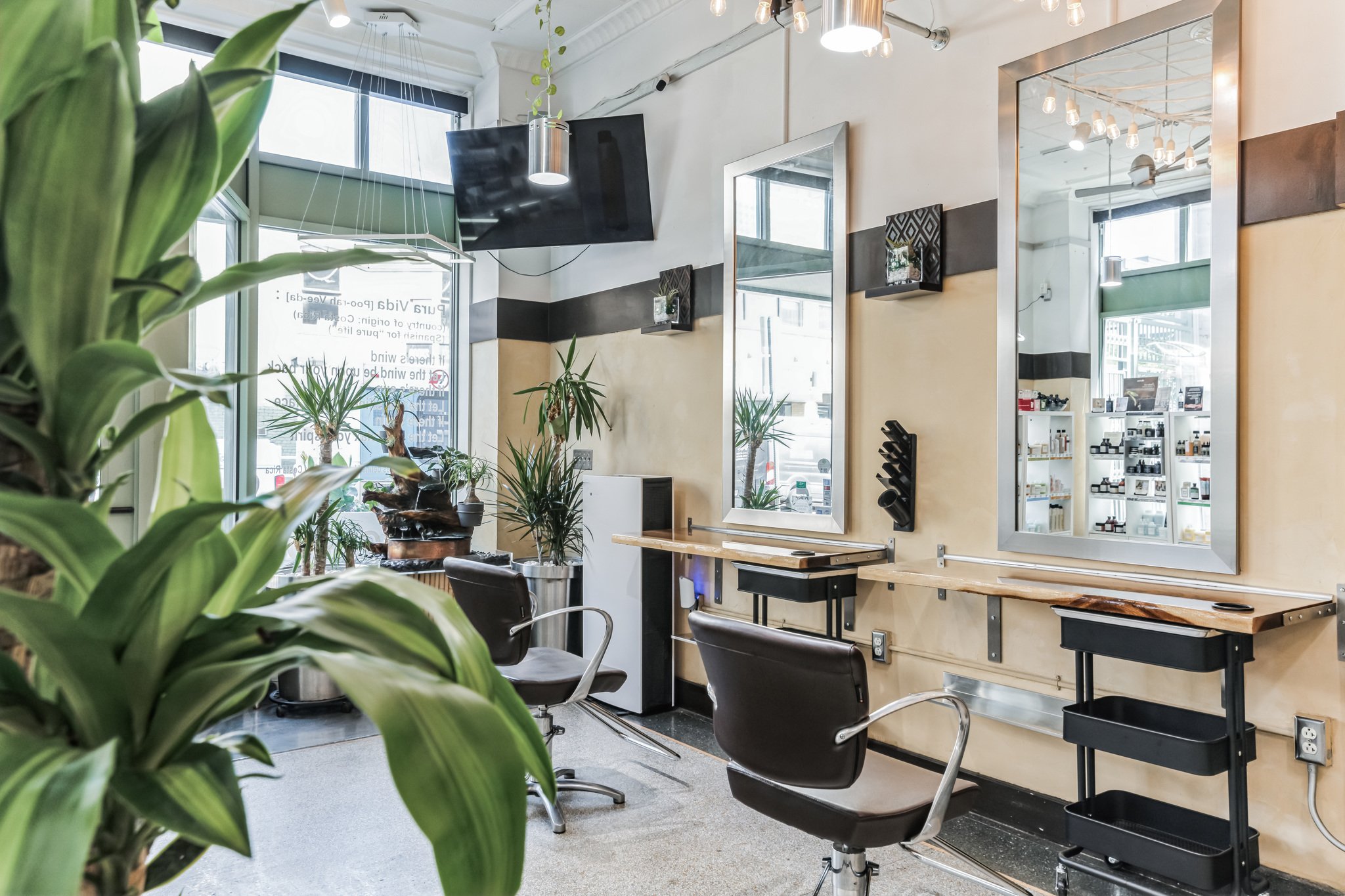
You've probably Googled something about hair before — what to tell your stylist, why your color faded fast, whether that at-home treatment was a mistake. If you're here, you're already thinking more carefully than most clients do. Good. Because What Professional Hairdressers Wish Every Client Knew Before Visiting a Salon isn't a list of obvious tips — it's the behind-the-scenes knowledge that separates a great appointment from a frustrating one. The stylists at our Ann Arbor salon work with all hair types, histories, and goals — and with years of experience across hundreds of color, cut, and chemical services, we've seen what happens when clients come in prepared, and we've seen what happens when they don't. This guide exists because we'd rather you walk in knowing exactly what we need from you — so we can give you exactly what you came in for. Read through each section before your next appointment. It will change how you show up.
Your Hair History Matters More Than You Think
Most clients walk into a salon and tell us what they want today. That's fine. But what happened to your hair over the last two years? That's what actually shapes what's possible. We see this constantly — someone wants to go platinum blonde, but they've been box-dyeing at home for months. Those two things don't always work together safely.
Your hair history is like a medical chart. A good stylist needs to read it before picking up a single tool. The products you've used, the chemical services you've had, even the water quality in your home — all of it lives inside your hair shaft right now. It affects how your hair responds to color, heat, and chemical treatments.
Box dye is the big one. And look, we're not here to shame anyone for it. But box dye contains metallic salts that professional color does not. Put professional lightener over those salts and things get unpredictable — uneven color, breakage, or worse. According to the Professional Beauty Association, chemical service failures are one of the most common sources of client complaints in salons. Knowing your history helps us avoid that.
Here's what most guides get wrong: they tell you to just "mention" your last service. Not enough. We need specifics — how long ago, what brand, did it fade fast or hold? Did your scalp react? Did it process faster or slower than expected? These details change our approach. Sometimes completely.
Think about heat damage. Daily flat-ironing on high heat for a year changes your hair's protein structure. It may look fine in the mirror, but it will behave differently under color or a chemical relaxer. We had a client last spring who wanted a keratin treatment after a full highlight — she hadn't mentioned the 450-degree iron she used every single day. We caught it during the consultation, but only because we asked the right questions and she answered honestly. If you're noticing that your results have been inconsistent lately, it might be time to talk through your full hair history with a professional hairdresser in Ann Arbor who can assess what's really going on.
Here in Ann Arbor, we also deal with hard water. The water supply in Washtenaw County has measurable mineral content, and those minerals — especially calcium and magnesium — build up on the hair shaft over time. That buildup blocks color from absorbing evenly. If your color has been looking dull faster than it used to, hard water could be part of the story. A clarifying treatment before color can help, but only if we know to look for it.
Medications matter too, and this one surprises people. Certain medications — including some blood pressure drugs, hormonal treatments, and thyroid medications — can change how your hair absorbs and holds color. Research on how medications affect hair structure supports what many stylists observe in the chair [Source: American Academy of Dermatology, aad.org]. We're not your doctor. But if you've started or changed a medication recently and your last color service didn't turn out the way it usually does, that connection is worth bringing up.
Before your appointment, take five minutes and think through your hair timeline. Write it down if that helps. What chemical services have you had in the last 12 months? Have you used any at-home color or treatments? Any major changes in health, diet, or medication? Any reactions to products? The more honest and specific you are, the better your stylist can plan a service that actually works for your hair — not just the hair they're imagining from your inspiration photo.
Your history is not a confession. It's information. And information is what turns a good appointment into a great one.
Inspiration Photos Help — But Only When Used the Right Way
Bringing a photo to your appointment is one of the best things you can do. We love when clients come in with a clear picture of what they want. But there's a right way and a wrong way to use inspiration photos — and most guides skip right past the part that actually matters.
The problem isn't the photo. The problem is when a client falls in love with a result that belongs to someone else's hair. We see this constantly. A client comes in with a screenshot of a balayage on thick, coarse, dark brown hair. Their hair is fine, color-treated, and light ash blonde. The end result will never look the same — not because we aren't skilled, but because hair doesn't work that way.
Hair texture, density, and your starting color all change what's possible in a single appointment. A photo shows you the finish line. It doesn't show you the road to get there — and for some clients, that road is three appointments long.
Here's what actually makes a photo useful. Bring more than one. Bring a photo of the color you want, a separate photo of the cut you want, and a photo of a style you absolutely hate. That last one is the one most people forget. It's often the most helpful thing you can hand us — knowing what you don't want saves everyone time.
We had a client earlier this year who came in with a gorgeous photo of curtain bangs. She had them cut exactly as shown. Two weeks later she called us — she didn't realize how much daily styling that look required. The photo didn't show the 20 minutes of blow-drying behind it. So now we always ask: "Do you style your hair every morning, or do you mostly let it air dry?" That one question changes everything about how we interpret your inspiration photo.
Look at the lifestyle behind the photo, not just the look. A lot of the images circulating on Pinterest and Instagram in Ann Arbor salons' saved folders belong to professional models or influencers with a full styling team. That's not a judgment — it's just reality. If your morning routine is 10 minutes, tell us that upfront. We'll find a version of your inspiration photo that works for your actual life.
Also good to know: lighting in photos lies. A color that looks like a warm honey blonde in a studio shot can read as a brassy orange under bathroom lighting. We always look at multiple photos of the same style in different lighting before committing to a color direction. If you can find your inspiration photo in natural light, that's the most accurate version to bring in.
Screenshots from TikTok and Instagram are fine — we're not snobs about the source. But try to save the highest-quality version you can find. A blurry, zoomed-in screenshot makes it hard to see the detail in the cut or the true tone of the color. The clearer the photo, the better conversation we can have about it.
And if you're not sure whether your inspiration photo is realistic for your hair type, just ask. That's what the consultation is for. A good stylist won't talk you out of what you want — they'll help you get as close to it as possible, honestly and without wasting your time. That conversation starts before a single cut is made.
Salon Timing Is a Two-Way Street
Most clients think about timing from one angle: when is the salon open, and when can I get in. But timing affects your results just as much as your stylist's technique. What professional hairdressers wish every client knew before visiting a salon includes this — the day you come in, and what happened to your hair before you arrived, matters more than most people expect.
Start with the obvious one. Don't book a color appointment the week before a big event. We see this constantly in Ann Arbor — someone wants a dramatic change right before a wedding or reunion, and there's no room to correct anything if the result isn't quite right. According to the Professional Beauty Association, color corrections are among the most common sources of client dissatisfaction, and most of them happen because there wasn't enough time built in. Give yourself at least two weeks of buffer.
But here's the part most guides skip entirely: the timing of your last service matters just as much as the timing of your next one.
If you just had a keratin treatment or a relaxer somewhere else, and now you want highlights, the clock on that previous service is running. Overlapping chemical services too soon causes breakage that no amount of conditioning will fix. A good stylist will ask about your history. Be honest. We had a client last spring who hadn't mentioned a box color she'd done at home three weeks prior — the lift came out uneven, and we spent an extra hour toning just to get it balanced. That's time neither of you planned for.
Heat styling history plays into this more than clients realize. Hair that's been flat-ironed daily for months behaves differently than hair that's been mostly air-dried. It affects how color grabs, how a cut falls, and how long a blowout will actually hold. According to a study published in the International Journal of Trichology, repeated thermal exposure changes the protein structure of the hair shaft over time. Your stylist isn't asking about your routine to judge you — they're doing math.
Seasonally, Ann Arbor's winters are hard on hair. Cold outdoor air and dry indoor heat pull moisture out fast. If you're coming in after a long stretch of cold months, your hair may need a treatment before it's ready for a color service. Scheduling a conditioning appointment a week or two before your color appointment isn't extra — it's prep work that protects your investment. If you're unsure where to start, our {parent_keyword} page walks through exactly what to expect when you come in.
One more thing worth knowing: the length of your appointment slot affects what's possible. If you booked a 45-minute slot but you're hoping for a full balayage with a toner and a blowout, that's a mismatch. Stylists work within the time that's been reserved. When there's not enough time, something gets rushed — and it's usually the part you care most about. When you call or book online, describe what you want, not just what service you think it's called. Say "I want my ends lighter and I have a lot of hair" instead of just clicking "highlights." That one detail changes the time estimate completely.
Timing isn't just logistics. It's part of how the service works. Treat it that way, and your results will show it.
Now that you understand what goes into a great salon appointment, you're ready to make yours count. Explore our full guide to {parent_keyword} to go even deeper — or skip straight to booking. Call us at (734) 757-6210 or schedule online, and come in knowing exactly what to expect. The consultation starts the moment you reach out.