
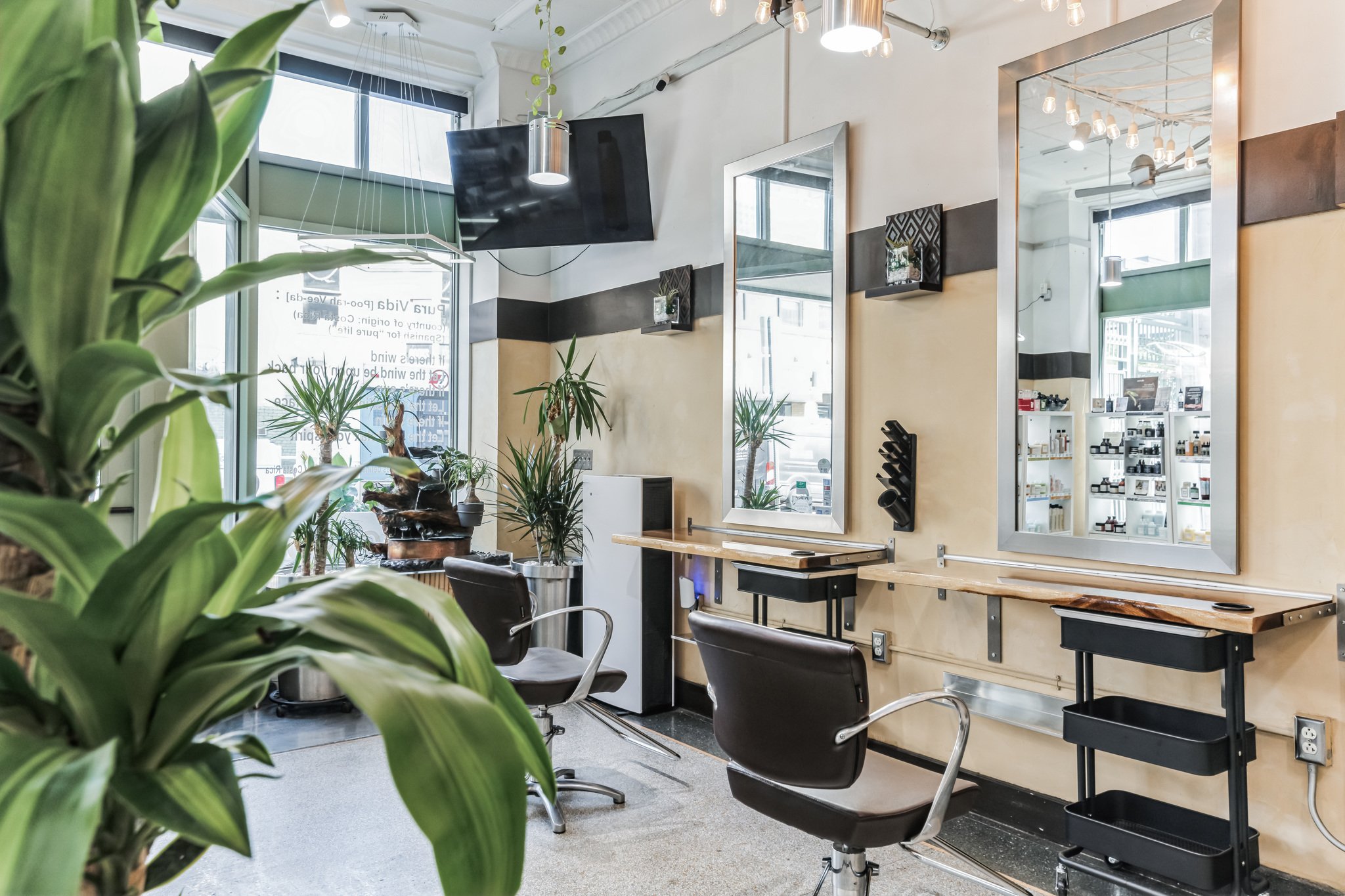
What to Do Before Booking Your First Hair Salon Appointment
You've been thinking about trying a new salon — maybe a new look, maybe just a fresh start with someone who actually listens. But now you're second-guessing yourself: What do you even say when you call? What if you show up and they do something completely wrong? Knowing what to do before booking your first hair salon appointment is the difference between walking out confident and walking out disappointed. At our Ann Arbor salon, we've seen both. The clients who come in prepared — even just a little — have a noticeably better experience every single time. Not because they had perfect hair or a perfect vision, but because they took a few small steps before they ever walked through the door. This guide covers exactly what those steps are. We've helped hundreds of Ann Arbor clients navigate their first appointments over the years. By the end, you'll know we know what we're talking about — and you'll know exactly what to do next.
This isn't complicated. But a few things matter a lot more than most guides admit.
Know Your Hair Before Anyone Else Touches It
Before you book anything, spend five minutes actually looking at your hair. Not styling it. Looking at it. Run your fingers through it when it's dry. Is it fine and limp? Thick and coarse? Does it frizz in Ann Arbor's humid summers or go flat in the dry winter air? These things change what services make sense for you.
Texture and density are two different things. A lot of people confuse them. Fine hair can be dense — lots of thin strands packed together. Coarse hair can be sparse. Knowing the difference helps you describe your hair to a stylist without guessing. The American Academy of Dermatology points out that hair texture is largely genetic, but damage from heat and chemical processing changes how hair behaves over time. That matters when a stylist is deciding how to approach your hair.
Firsthand note: A client came in last spring who had been flat-ironing every day for two years. She thought her hair was naturally dry and coarse. It wasn't — it was heat-damaged. Knowing that upfront changed everything about how we approached her first appointment.
Also check your scalp. Oily, dry, or somewhere in between? Any sensitivity or flaking? This isn't embarrassing information — it's useful information. A good stylist will ask. You should have an answer ready.
Gather Reference Photos — But Do It Right
This is where most people either skip a step or go too far. Zero photos is a problem. Forty-seven screenshots of completely different looks is also a problem.
Pick two to four photos max. One or two of what you actually want. One of what you absolutely do not want. That second category is underrated — stylists love knowing what to avoid just as much as what to aim for.
Here's what most guides get wrong about reference photos: the person in the photo matters as much as the hair. If someone has thick, naturally wavy hair and you have fine, straight hair, that photo is a goal, not a guarantee. Be honest with yourself about that before you walk in. A great stylist will tell you the same thing — but it's better if you already know it.
Look for photos where the person's hair texture looks similar to yours. Search by hair type, not just by style. A 2022 Mintel survey found that 62% of salon clients reported being disappointed when results didn't match their expectations — and communication before the appointment was the most cited factor. That gap between expectation and reality usually starts with a photo that wasn't realistic for the person's actual hair. If you're already noticing that gap in your own planning, it might be worth talking through your goals with a stylist before you book — our Ann Arbor hair salon offers consultations specifically for this reason.
Firsthand note: We've found that clients who bring one clear "yes" photo and one clear "no" photo almost always leave happier than clients who bring a folder full of inspiration images. The clarity helps everyone.
Research the Salon Before You Call
Not all salons do all things well. Some specialize in color. Some are known for cuts. Some focus on textured or curly hair. In Ann Arbor, you have real options — so take ten minutes to figure out which type of salon matches what you actually need.
Look at the salon's social media or portfolio. Are the styles they post similar to what you're looking for? If you want a lived-in balayage and their feed is full of sharp geometric cuts, that's useful information. It doesn't mean they can't do color. But it tells you something about where their focus is.
Read reviews, but read them selectively. Look for patterns, not outliers. One bad review doesn't tell you much. Ten reviews that all mention the same issue — running behind schedule, poor communication, color that faded fast — that's a pattern worth knowing. BrightLocal's 2023 Local Consumer Review Survey found that 87% of consumers read online reviews before choosing a local business. You're already doing this for restaurants and mechanics. Do it for your hair too.
Check whether the salon offers consultations before a full appointment. Many do. A consultation — even a short phone call — is a chance to ask questions and get a feel for how the stylist communicates. If they're dismissive or vague during a consultation, that's a signal.
Firsthand note: We always recommend a consultation call for clients making a big change — going significantly shorter, starting a color process, or coming in with chemically treated hair. Five minutes on the phone prevents a lot of surprises on the day of the appointment.
Be Honest About Your Hair History
This is the one thing people are most likely to downplay. And it causes the most problems.
Your stylist needs to know what has been done to your hair. Box dye. Bleach. Keratin treatments. Relaxers. Perms. Heat damage from years of daily styling. All of it. This isn't a judgment — it's chemistry. What's in your hair affects what can safely be done to it next.
Box dye in particular is something stylists need to know about. The pigment molecules in box dye behave differently than professional color. Applying certain salon services over box dye without knowing it's there can cause uneven results or, in some cases, damage. The Professional Beauty Association has identified undisclosed hair history as one of the leading causes of unexpected color results in salon settings. Some facilities even formalize this kind of intake process — the MCI Framingham Inmate Hand Book guidelines for personal care illustrate how structured hair history documentation can prevent service complications in institutional settings.
And look — if you're not sure what was done to your hair, say that. "I think it was box dye but I'm not certain" is a perfectly fine answer. Stylists work with uncertainty all the time. What they can't work with is wrong information presented as fact.
Think back at least 12 to 18 months. Hair grows roughly half an inch per month on average, per the American Academy of Dermatology. That means a year of growth is roughly six inches. Anything done to your hair in that window is probably still on your head somewhere.
Set a Realistic Expectation for Your First Visit
Your first appointment with a new stylist is a relationship. Not a transaction.
A good stylist is learning your hair, your preferences, and how you communicate. You're learning their style, their process, and whether you trust them. That takes more than one visit sometimes. Going in expecting perfection from someone who has never touched your hair before puts pressure on both of you — and that doesn't help anyone.
This doesn't mean settling for mediocre results. It means giving the process room to work. If you want a dramatic change — a significant cut, a full color transformation — talk about doing it in stages. Many experienced stylists will actually suggest this themselves. It's not about making you come back more. It's about protecting your hair and getting the result right.
A study published in the Journal of Cosmetic Dermatology found that gradual color changes cause far less structural damage to hair than aggressive single-session transformations. That's not a sales pitch. That's just how hair works.
Firsthand note: Clients who come in saying "I want to get there gradually" almost always end up with better long-term results than clients who want everything done in one session. The hair just responds better when you give it time.
Prepare a Few Simple Questions to Ask
You don't need a list of twenty questions. Two or three good ones will do. The right questions tell you a lot about how a stylist thinks and communicates.
Ask what they'd recommend given your hair type and the look you're going for. A stylist who listens carefully and gives you a thoughtful answer — not just a yes to everything you said — is someone worth trusting. If they immediately agree with everything without asking a single follow-up question, pay attention to that.
Ask about maintenance. What will this haircut or color look like in six weeks? In three months? What do you need to do at home to keep it looking good? This tells you what you're actually signing up for. Some styles need a lot of upkeep. Others are low-maintenance by design. Know which one you're getting.
Ask about timing. How long will the appointment take? Some services — especially color — take several hours. If you're booking something for the first time, you need to know that before you show up with a 2pm meeting on your calendar.
These aren't trick questions. They're just practical. And how a stylist answers them tells you a lot about whether you've found the right fit. If you're still unsure what questions to bring or what to expect, our Ann Arbor hair salon services page walks through what each service involves — it's a useful read before your first call.
Now that you understand the process, take the first step. Browse our Ann Arbor hair salon services to see everything we offer — cuts, color, consultations, and more. When you're ready to book, give us a call or schedule online. We'll make sure your first appointment is everything you came prepared for.