
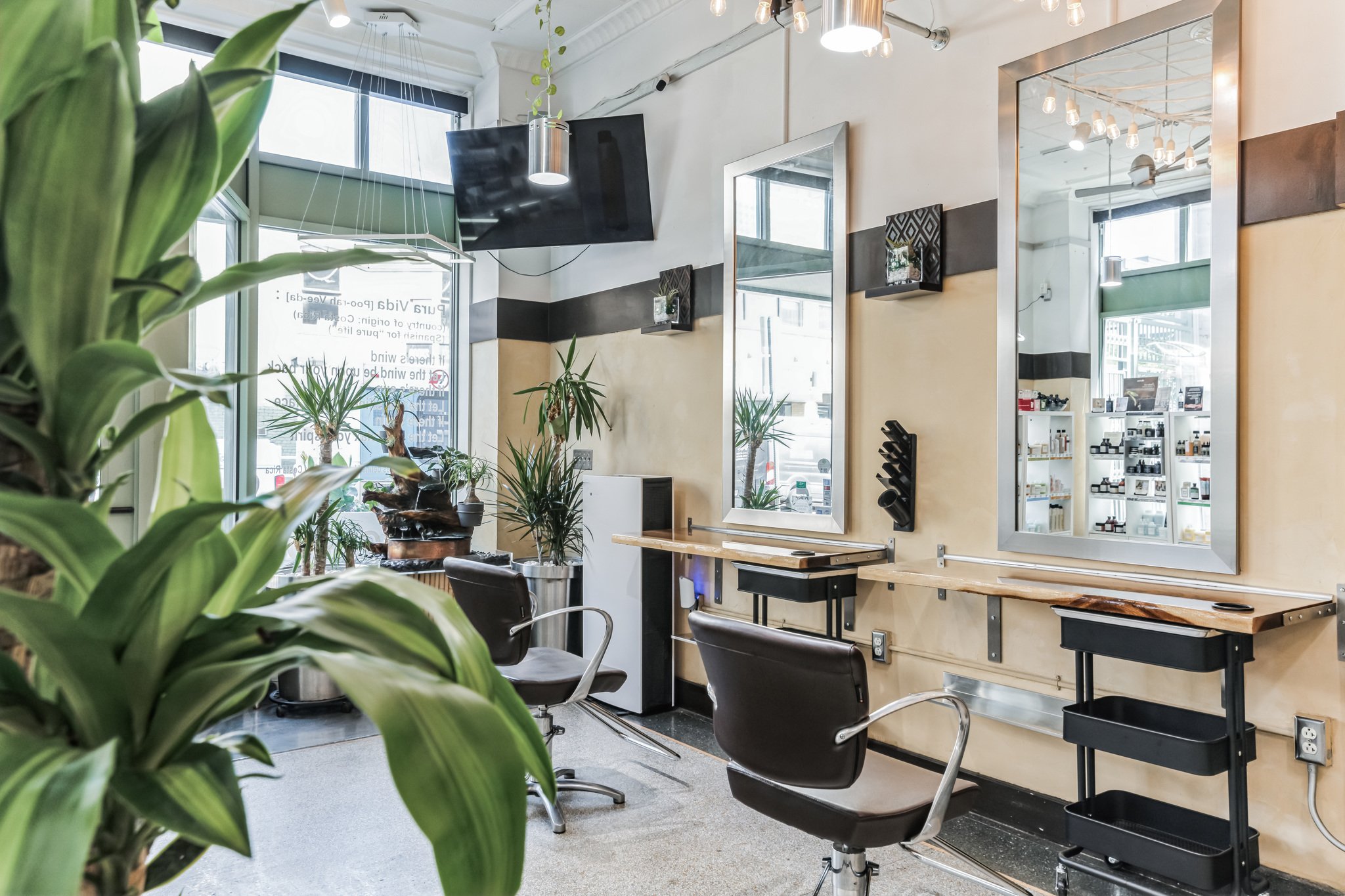
You've been thinking about this for months — maybe longer. You've saved the photos, watched the videos, and wondered what it would actually look like on you. Today you searched for hair extensions in Ann Arbor, and that search means you're finally ready to stop wondering. The question now isn't whether to do it. It's who to trust with your hair. That's where Pura Vida comes in. Every client who sits in our chair gets an honest assessment, a real conversation, and a result that looks like it grew out of their own head — not an obvious add-on. We're not here to sell you a method. We're here to find the right one for your hair, your lifestyle, and your life in Ann Arbor.
The Right Extension Type Makes All the Difference
Not every extension method works for every person. Your hair texture, thickness, lifestyle, and even how much time you spend outdoors in Ann Arbor's seasons all play a role in which method will actually hold up and look natural on you.
Several main extension types exist. Each one attaches differently, lasts a different amount of time, and works best for a specific hair type or goal.
Tape-in extensions use thin, pre-taped wefts that sandwich your natural hair. They lay flat against your head. Fine to medium hair? This is often your best match. They're also one of the faster methods to apply, which matters when your schedule is already packed.
Sew-in or weft extensions involve braiding your natural hair into cornrows and sewing the weft onto the braid. Serious volume. Real length. This method works best on thicker, stronger hair, and many clients in the Kerrytown and Old West Side neighborhoods choose it because it holds up through active, busy schedules.
Fusion or keratin bond extensions use small bonds of keratin glue to attach individual strands to your natural hair. The result looks very natural because the extensions move like your own hair. Takes longer to apply — but also lasts longer before needing a refresh. If you want the most seamless look, this is often the right choice.
Clip-in extensions are the only temporary option. You put them in yourself and take them out at night. Never worn extensions before? Clip-ins let you test a look before committing to anything permanent. They don't require any appointment beyond an initial consultation to match your color correctly.
Halo extensions sit on an invisible wire that rests on top of your head. No heat, no glue, no braiding. Quick to put on and gentle on your strands. If your hair has been through heavy chemical processing or runs on the thinner side, a halo style gives you volume without adding stress to the attachment points. Low-tension methods are especially important for clients with fragile or thinning strands.
Here's how to think about choosing between them:
- Fine or fragile hair does best with tape-ins or halo styles
- Thick or coarse hair handles sew-ins and fusion bonds well
- Active lifestyles need a method that won't shift during workouts or outdoor time
- Low-maintenance routines call for methods that don't need frequent salon visits
- Temporary curiosity is best served by clip-ins first
One thing that gets overlooked is Ann Arbor's weather. Humidity in the summer months can cause certain bond types to loosen faster. Cold, dry winters make hair more brittle at the attachment points. Knowing this ahead of time helps you and your stylist pick a method that won't break down between appointments.
Color matching matters just as much as method. Extensions that are even slightly off in tone will stand out in natural light — especially when you're outside on a bright day near the Huron River or walking across campus. A good color match pulls from multiple tones in your hair, not just one flat shade.
The goal is always for your extensions to look like they grew out of your own head. The right method gets you there. Wrong method — even with perfect color — will feel uncomfortable, look unnatural, or wear out too fast. Take the time to talk through your options before any application begins. That conversation is what separates a result you love from one you regret. Not sure which method fits your hair? We can help you figure that out in a free consultation.
What to Expect During Your Extension Consultation at Pura Vida
Booking a consultation is the first real step. This appointment is the foundation of your entire extension experience — not just a chance to pick a color swatch, but a conversation that shapes how your hair looks and feels for months.
When you arrive, your stylist sits down with you one-on-one. No rushing. The goal is to understand your hair history, your daily routine, and what you're hoping to achieve. Length? Volume? Both? Your stylist listens first before making any recommendations.
The first thing your stylist does is examine your natural hair. Thickness, texture, overall health — all of it matters. Fine hair responds differently than coarse hair. Chemically treated strands need a different approach than virgin hair. This hands-on assessment shapes every recommendation that follows.
Next comes the lifestyle conversation. This is where things get specific. Do you swim at the YMCA on Fuller Road? Work out every day? Reach for heat tools regularly? These details change which application method makes the most sense. A client in Kerrytown who bikes to work every morning has different needs than someone working from home in Burns Park. Your stylist factors all of it in.
Color matching happens during this same appointment. Your stylist pulls extension samples and places them against your natural hair in natural light — checking your base color, your ends, and any highlights or tones you already carry. Getting this right is non-negotiable. A poor color match is visible immediately, and fixing it costs time and money. Pura Vida takes this step seriously.
Your stylist also walks you through the application methods that fit your hair and your goals. How each one is applied, how long it lasts, what upkeep looks like. You leave knowing exactly what your maintenance schedule will look like — how often to come back, how to brush properly, and which products to avoid. No surprises after your installation appointment.
You'll also get a realistic picture of what extensions can and cannot do for your specific hair. If your natural hair needs strengthening before extensions can be safely applied, your stylist tells you that directly. This honesty protects your hair and sets you up for a result that actually holds. Many clients in Ann Arbor arrive having seen extension results on social media that don't reflect their own hair type at all. Your stylist helps you set realistic expectations based on what your hair can actually support right now. If you're worried your hair isn't in good enough shape yet, bring that concern to the consultation — that's exactly the kind of thing we work through together.
Before you leave, you have a clear plan. You know which method was recommended, why it was recommended, and what comes next. Ready to book your installation that day? Your stylist can get you on the schedule. Need time to think it over? That's completely fine. No pressure. The consultation is about giving you the information you need to make a confident decision.
Most consultations at Pura Vida run between 30 and 45 minutes. Enough time to cover everything without feeling rushed. Come with questions. Bring photos of looks you like. The more you share, the better your stylist can guide you — this appointment is yours, and we want you to walk out of it feeling informed and ready.
How Hair Extensions Are Applied at Our Ann Arbor Studio
Every application starts with a one-on-one conversation. You sit down with your stylist before a single extension is touched. Your natural hair texture, density, and length all get examined — then together you map out which method fits your hair and your lifestyle.
Ann Arbor clients come in with very different hair types. Some have fine, straight hair. Others have thick, wavy strands. The application method chosen depends entirely on what your hair can support safely and comfortably.
Here is a look at the main methods used and what each one involves:
- Tape-in extensions — Thin wefts are sandwiched on either side of a small section of your natural hair. No heat is applied to the bond itself. The process typically takes one to two hours.
- Sew-in / weave extensions — Your natural hair is braided into cornrows. Wefts are then sewn directly onto those braids. This method works well for thicker hair types.
- Micro-link / bead extensions — Small metal rings are clamped around tiny sections of your hair and a strand of extension hair. No adhesive or heat is used at the attachment point.
- Keratin bond (fusion) extensions — Individual extension strands are fused to small sections of your natural hair using a low-heat tool and a keratin adhesive. This method gives the most seamless, natural look.
- Clip-in extensions — Wefts with small pressure clips attach and detach from your hair. These are temporary and applied by you at home after a brief tutorial in the studio.
Once a method is agreed on, your hair gets sectioned carefully. For most methods, the work starts from the nape of the neck and moves upward. This keeps the extensions hidden under your natural layers. Clients from Kerrytown to the South Side consistently say they love how undetectable the results look from every angle.
Color matching is a step taken seriously here. Extension strands get held next to your hair in natural light — checking the root tone, the mid-shaft, and the ends. If a single shade doesn't match perfectly, two tones get blended. That extra step is what separates a natural result from an obvious one.
During the application itself, you're seated comfortably in the styling chair. Depending on the method, the process can take anywhere from ninety minutes to three hours. The work happens in a quiet, focused environment so placement stays precise. Ask questions at any point — each step gets explained as it goes.
After the extensions are placed, a full cut and blend follows. Not optional. Blending is what makes your natural hair and the extensions look like one continuous length. Your hair gets dried and checked for fall, movement, and weight distribution. If anything feels off, it gets adjusted before you leave the chair.
Before you walk out the door, you get a short care routine walkthrough. Which brush to use, how to sleep with your extensions, which products to avoid near the bonds or wefts. Clients who follow these steps consistently get the longest wear out of their extensions. Your first maintenance appointment also gets scheduled before you leave, so nothing slips through the cracks.
The full process — consultation, application, blend, and aftercare walkthrough — happens in one visit at the Ann Arbor studio. Our stylists are licensed cosmetologists with years of extension-specific experience across every major method. You leave with a complete look, not a half-finished one. That's the approach for every single appointment, regardless of which method you choose.
You've done the research. You know what you want. The next step is booking your consultation at Pura Vida — where an Ann Arbor stylist will sit down with you, assess your hair, and build a plan that actually fits your life. Call us directly or book online to claim your spot. Come in with questions, leave with a plan — and an installation date on the calendar.