
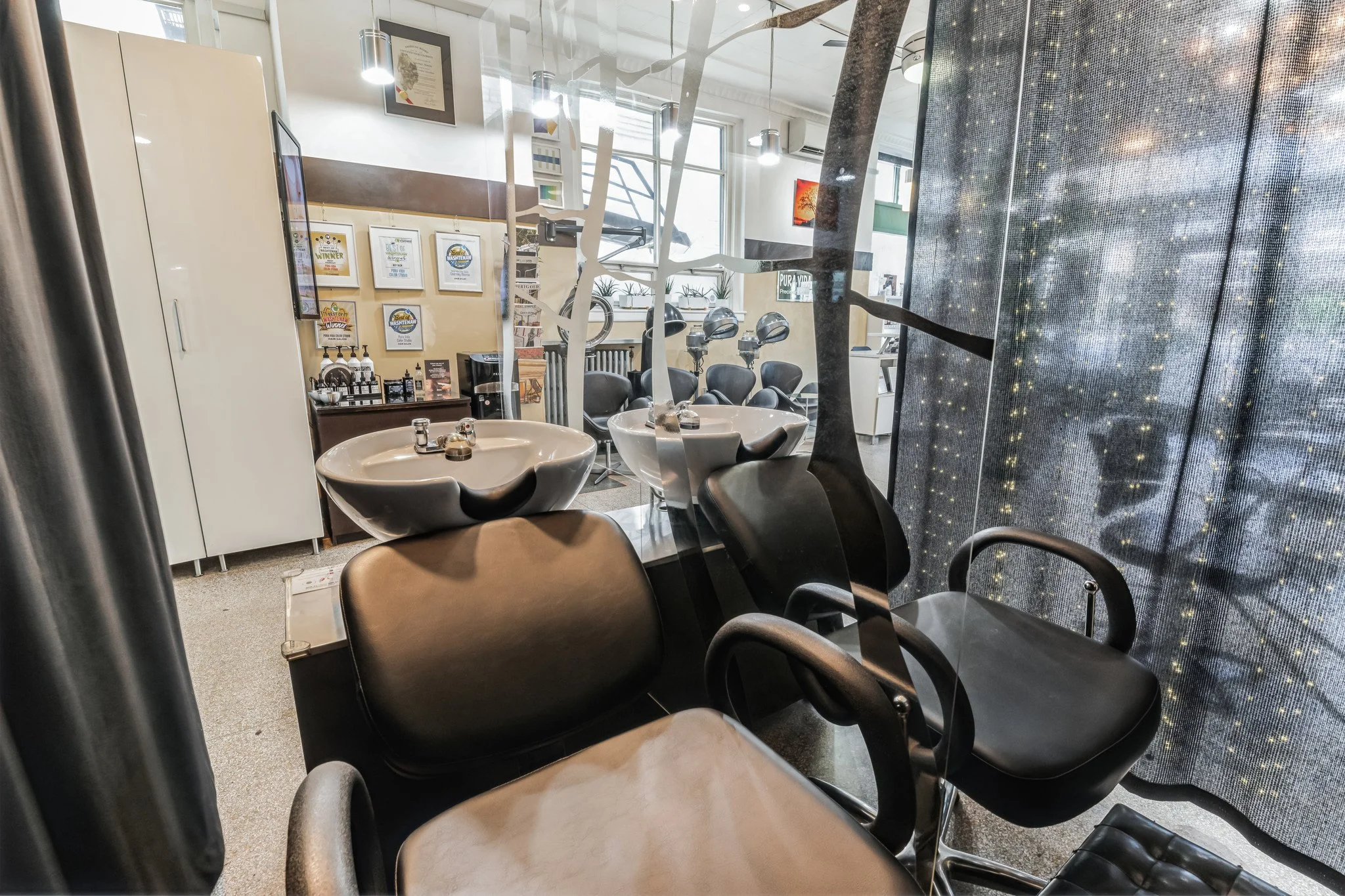
You've been staring at your part in the mirror more than usual lately. The flaking won't quit. The itching is embarrassing. You've tried three different shampoos and nothing's changed — so today you searched for a scalp health consultation in Ann Arbor. That search was the right call. At Pura Vida Color Studio Hair Salon, this is exactly what we do. Not a quick look before a trim. A real, focused assessment of what's actually happening on your scalp — followed by a clear explanation and a plan that matches your specific condition. Ann Arbor winters are brutal on scalp health. Forced air heat, hard water in older neighborhoods, and cold dry air from October through March create a perfect storm for irritation, dryness, and buildup. You deserve answers that account for all of that — not a generic product recommendation and a shrug.
Signs Your Scalp Needs a Professional Assessment
Most people ignore their scalp until something feels seriously wrong. But warning signs show up long before the problem gets bad. Knowing what to look for can save you months of guessing — and protect your hair in the process.
A scalp health consultation in Ann Arbor can catch issues early, before they become harder to treat. Here are the signs that tell you it's time to stop waiting.
Persistent flaking is one of the most common reasons people come in for an assessment. Dandruff shampoo helps some people. Not everyone. If you've been using over-the-counter products for four to six weeks and still see white or yellow flakes, something deeper may be going on. Seborrheic dermatitis, psoriasis, and fungal overgrowth all cause flaking — and each one needs a different approach. Treating the wrong condition makes things worse, not better.
Itching that won't quit is another clear signal. An occasional itch is normal. But if you're scratching throughout the day — especially at your hairline, crown, or behind the ears — your scalp is telling you something is off. Constant itching can come from dryness, product buildup, contact dermatitis, or an imbalanced scalp microbiome. In Ann Arbor, cold winters and dry indoor heat from October through March pull moisture out of your scalp fast. That seasonal dryness can trigger or worsen itching that feels impossible to shake.
Excess oiliness or sudden changes in scalp texture are also worth paying attention to. If your hair looks greasy just a few hours after washing, your sebaceous glands may be overproducing oil — which can clog follicles and slow hair growth over time. On the flip side, a scalp that suddenly feels tight or rough — especially if you live in neighborhoods like Burns Park or the Old West Side where older homes can have harder water — may be reacting to mineral buildup or a damaged moisture barrier.
Hair shedding above your normal rate is a sign many people dismiss too long. Losing 50 to 100 hairs per day is considered typical, according to the American Academy of Dermatology. Finding more than that on your pillow, in the shower drain, or on your brush? A scalp assessment can help identify whether the root cause is follicle health, stress, hormonal shifts, or nutritional gaps. Catching this early makes a real difference in outcomes. As interest in scalp and follicle health continues to grow, the world of hair restoration is expanding with new approaches that make early intervention more effective than ever.
Redness, tenderness, or visible sores on the scalp should never be ignored. These symptoms can point to inflammation, infection, or autoimmune conditions that need proper identification before any treatment begins. If you feel pain when touching certain spots, or notice raised patches that don't go away, a professional needs to look at it. Home remedies are not the right tool here.
Slow or stalled hair growth is a subtler sign, but it matters. Months passing with no noticeable growth — or a part that keeps widening — suggests your follicles may not be getting what they need. A scalp assessment looks at follicle density, circulation, and the overall condition of the scalp environment. All of that directly affects how well your hair grows.
You don't need a dramatic problem to benefit from a professional look. Many people in Ann Arbor come in simply because something feels different and they want answers. That instinct is worth trusting. Not sure whether your symptoms warrant a full consultation? We can help you figure that out before you even book. The earlier a scalp issue is identified, the more options you have for addressing it.
What Happens During a Scalp Health Consultation at Pura Vida Color Studio Hair Salon
When you come in for a scalp health consultation at Pura Vida Color Studio Hair Salon, you get a real, structured look at what's happening on your scalp. This is not a quick glance before a haircut. It's a focused appointment built entirely around your specific concerns.
The process starts with questions. What are you noticing? How long has it been happening? What products are you currently using? These answers provide context before anyone even looks at your scalp. A lot of people in Ann Arbor come in frustrated — guessing at solutions for months. The consultation stops the guessing.
Next comes the hands-on scalp analysis. The condition of your scalp skin gets examined directly — texture, color, oil levels, and any visible buildup or irritation. Hair follicles are checked where they meet the scalp, along with density and whether hair looks healthy at the root. Dry flaking looks different from product buildup. Irritation from hard water looks different from contact sensitivity. Those differences are identifiable, and what's found gets explained in plain terms.
Lifestyle factors come into the conversation too. Diet, stress levels, wash frequency, and regular heat use — all of these affect scalp health. Ann Arbor's cold, dry winters pull moisture from your scalp. If you live or work near the University of Michigan campus and spend a lot of time indoors with forced air heat, that can make dryness considerably worse. Those local conditions factor into everything discussed during the appointment.
After the analysis, you get a full walkthrough of everything observed. What's contributing to your scalp condition and what isn't. Hard water buildup, heavy product residue, inflammation, sensitivity — all of it gets pointed out clearly. You leave knowing what is actually going on. Not just with a product recommendation and no explanation.
From there, a care plan comes together. This might include a scalp treatment done in the studio, adjustments to your at-home routine, or a change in how often you cleanse. Some clients need a single corrective treatment. Others benefit from a short series of appointments. The recommendation is based on what was found — and the reasoning gets explained.
Many clients in the Old West Side neighborhood come in thinking they have one issue — say, dry scalp — and find out the real problem is product buildup or an imbalanced moisture routine. That kind of clarity is what makes the consultation worth it. You stop spending money on products that don't match your actual condition. Ready to stop guessing and get a real answer? We're easy to reach.
The appointment typically takes between 45 minutes and an hour. No need to come in with freshly washed hair. In fact, a day or two of natural buildup gives a more accurate picture of your scalp's baseline. Wear comfortable clothing. Avoid heavy styling products the day of your visit if you can.
By the end of the appointment, you'll have a clear picture of your scalp health, a written summary of what was found, and a realistic plan to move forward. No guesswork. No generic advice. Just a straightforward look at your scalp and a path to feeling better about it.
How to Prepare for Your Scalp Consultation Appointment
A little preparation before your scalp health consultation makes a real difference. The more your stylist or trichologist can see, the better your results will be — and with over a decade of experience assessing scalp conditions in Ann Arbor, our team knows exactly what to look for. A few simple steps before you walk in can save time and get you answers faster.
Skip your wash day. Come to your Ann Arbor appointment with unwashed hair — ideally 24 to 48 hours after your last shampoo. This lets the specialist see your scalp in its natural state. Product buildup, oil patterns, and flaking are all easier to spot on hair that hasn't been freshly cleaned.
Avoid dry shampoo, scalp serums, or styling sprays the morning of your visit. These products coat the scalp and hide what's actually happening underneath. Even a light mist of hairspray can interfere with how the scalp looks under a dermatoscope or magnifying lens. Clear scalp equals clear answers.
Take photos before you come in. If you've noticed thinning patches, redness, or flaking at specific times — like after a stressful week during finals season near the University of Michigan campus — photograph those areas in natural light. Photos taken over several weeks tell a story that a single appointment can't always capture. Bring those images on your phone so your specialist can track patterns over time.
Write down your product history. Think about every shampoo, conditioner, oil, and treatment you've used in the past three months. Include how often you wash, whether you use heat tools, and any recent color or chemical services. This information helps narrow down whether your scalp concerns are product-related, hormonal, environmental, or something else entirely.
Note any changes in your health or lifestyle. Scalp issues often connect to what's happening inside your body. Recent diet shifts, new medications, stress spikes, or changes in sleep can all show up on your scalp. According to the American Academy of Dermatology, hair shedding and scalp inflammation are frequently linked to internal health changes. Your specialist needs this context to give you accurate guidance. If you're unsure whether what you're experiencing is serious enough to warrant a visit, that uncertainty alone is a good reason to come in — a brief conversation can point you in the right direction.
If you have a history of scalp conditions — psoriasis, seborrheic dermatitis, eczema, or folliculitis — bring any previous diagnoses or treatments you've tried. Even treatments that didn't work matter. That information tells your specialist what to rule out and where to focus.
Wear your hair down or in a loose style when you arrive. Tight ponytails, buns, or braids can compress the scalp and temporarily change what the skin looks like. Loose hair also makes it easier to part and section during the examination without pulling or disturbing the scalp unnecessarily.
Come with questions ready. Think about what you actually want to know. Thinning at the crown? Persistent itching that gets worse in winter? Oily roots that return within a day of washing? The more specific your questions, the more targeted your consultation will be. Clients who walk in from neighborhoods like Burns Park or Kerrytown with a clear list of concerns tend to leave with a clearer plan.
Plan for enough time. A thorough scalp consultation is not a quick service. Expect to spend at least 45 minutes to an hour. Rushing through it means missing details — and missing details means missing answers. Block out that time so you're not watching the clock. Your scalp health is worth the full appointment.
You've been patient with this long enough. Book your scalp health consultation at Pura Vida Color Studio Hair Salon in Ann Arbor and walk out with real answers — not another product to try. Call us to schedule your appointment, and we'll confirm your time, tell you exactly how to prepare, and make sure you're set up for a full, focused session. One appointment. A clear picture of your scalp. A plan that actually fits your condition.