
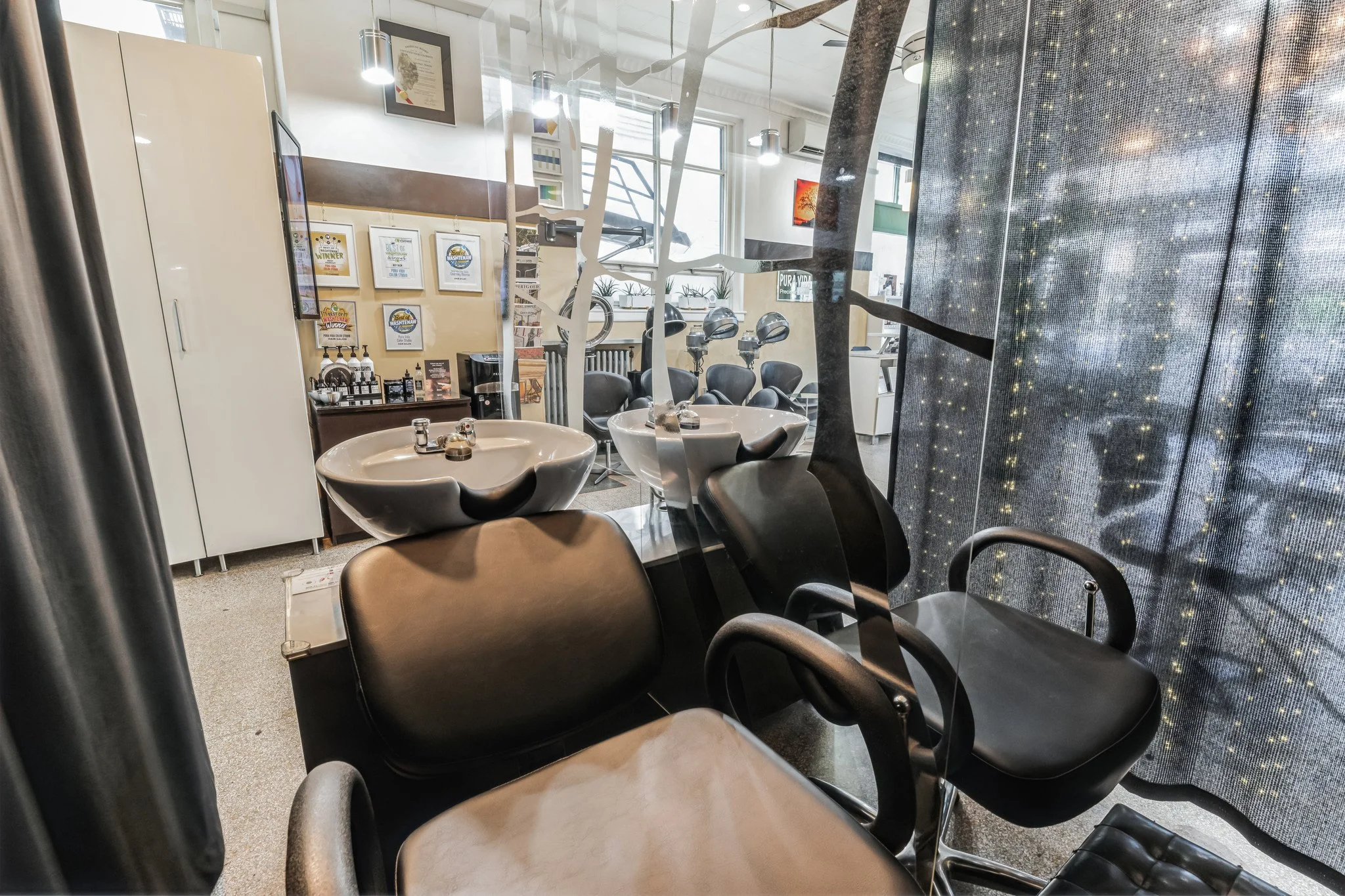
You've been thinking about it for a while — maybe since your last appointment left your scalp tight and itchy for two days after. Maybe since you noticed your hair snapping off near the ends more than it used to. Today you searched for low ammonia color in Ann Arbor, and that search brought you here. That's not a coincidence. It means you already know something needs to change, you just want to make sure you're choosing the right place to change it. We work with clients every week who've been tolerating uncomfortable color services for years without realizing there's a better option — one that doesn't ask you to choose between vibrant results and hair that actually feels healthy. You don't have to make that trade-off. You just need a colorist who knows how to deliver both, and that's exactly what we do.
Low Ammonia Hair Color in Ann Arbor: What It Is and Why It Matters
You're not alone if you've been searching for low ammonia color in Ann Arbor. More clients ask about it every week — and for good reason. Standard hair color uses ammonia to open the hair cuticle and deposit pigment. Low ammonia formulas do the same job with far less of that harsh chemical.
The result? Less scalp irritation. Less smell in the salon. Hair that actually feels softer after your appointment than when you walked in.
Here's what actually happens during a low ammonia color service. The formula still lifts and deposits color — it just uses a gentler alkaline agent to do it. Your cuticle opens, the color goes in, and the cuticle closes back down. Lower ammonia levels mean less protein damage to each strand during that process. That part matters more than most people realize.
This matters most if you color regularly. Every appointment puts some stress on your hair. With low ammonia formulas, that stress is reduced — and over months and years, that adds up to hair that holds onto moisture better and breaks less often.
Low ammonia color works especially well for clients who fall into one of these groups:
- You have a sensitive scalp that burns or itches during color
- You're pregnant or prefer to limit chemical exposure
- Your hair is fine, damaged, or chemically processed
- You sit in the salon chair regularly and want to protect your investment
- You've noticed your color fades faster than it used to
Ann Arbor clients come to us from neighborhoods like Burns Park and Kerrytown asking about this service specifically. They've done their research. They know what they want. They just need a stylist who knows how to deliver it correctly.
And that's the part most people don't talk about. Low ammonia color requires a genuinely different approach than standard color. Processing times can vary. Developer strength matters more. The stylist needs to understand how the specific formula behaves — because these products don't all perform the way standard color does.
A skilled colorist adjusts technique based on your starting color, your hair's current condition, and the result you're going for. Not guesswork. Experience with the product category, applied to your specific hair on the day of your appointment.
You should also know what low ammonia color won't do. It won't lift dramatically in one session the way a high-lift color might. Going from dark brown to platinum? That's a different conversation entirely. But for covering gray, refreshing your tone, adding dimension, or maintaining a color you love — low ammonia formulas deliver results that look just as rich and last just as long as traditional color.
According to research published by the International Journal of Cosmetic Science, low ammonia and ammonia-free formulas have improved significantly in the past decade. Today's versions achieve comparable color results to traditional formulas while reducing fiber damage markers.
What that means for you: you don't have to sacrifice color quality to protect your hair. You get both.
Before you book a low ammonia color service in Ann Arbor, come in with clean, dry hair. Skip the heavy conditioner the day before. Plan to talk with your stylist before the color goes on — a quick consultation helps dial in the right formula and developer for your hair type and color goal.
This is a service that rewards communication. The more your stylist knows about your hair history, the better your result will be. Not sure which formula is right for you? We're happy to talk it through before you commit to anything.
What Is Low Ammonia Hair Color and Why Does It Matter?
Simply put, low ammonia color is a hair coloring formula that uses little or no ammonia to open the hair cuticle. Instead, it relies on gentler alkaline agents to deposit pigment. The result is rich, lasting color with less chemical stress on your hair and scalp.
Traditional color uses high ammonia levels to lift the cuticle fast. That process works — but it can leave hair feeling dry, brittle, or irritated. Low ammonia formulas work more slowly and gently. Your cuticle opens just enough to accept color, then closes back down smoothly.
Here's what that means in practical terms:
- Less scalp irritation during and after your appointment
- Hair that feels softer and more hydrated after color
- A noticeably reduced chemical smell in the salon
- Color that fades more gradually and evenly over time
Low ammonia color works well for a wide range of goals. It covers gray reliably. It adds depth, gloss, or dimension to natural hair. It refreshes faded color between major services. For Ann Arbor clients who color regularly, it's a smart way to protect hair health over the long term.
This type of color is not the same as "demi-permanent" or "deposit-only" color, though those terms get mixed up often. Low ammonia formulas can still lift slightly and provide long-lasting results. The key difference is the chemistry — not the staying power.
If your scalp tends to tingle, burn, or itch during color services, low ammonia is worth asking about specifically. Many clients who thought they were "sensitive to color" find they're actually sensitive to ammonia — and switching formulas changes the entire experience. Switching formulas can change the entire experience.
Low ammonia color is also a strong choice if your hair has been chemically treated before — relaxed, permed, or heavily highlighted. Layering harsh chemicals on already-processed hair increases breakage risk. Studies analyzing inorganic markers and carbonaceous components in airborne particles highlight how cumulative chemical exposure affects biological tissue — a principle that applies directly to how repeated harsh color treatments stress hair fiber over time. A gentler formula gives your hair a better chance to stay strong between appointments.
Want to learn more about all your color options? Visit our hair color services page to see the full range of what we offer.
Signs Your Hair and Scalp Are Ready for a Gentler Color Formula
Your hair talks to you. You just have to know what to listen for. If you've been coloring for years and something feels off lately, your hair and scalp may be telling you it's time to switch to low ammonia color in Ann Arbor.
Here are the clearest signs that a gentler formula is the right move for you right now.
Your scalp burns or tingles during color services. A little warmth is normal. Burning, stinging, or a tight feeling that lasts more than a few minutes is not. High-ammonia formulas open the hair cuticle aggressively. For some scalps, that chemical lift triggers real irritation. If you've been white-knuckling through your color appointments hoping it gets better, it usually doesn't — it tends to get worse over time.
You notice flaking or redness after coloring. Post-color flaking isn't always dandruff. Sometimes it's a scalp that's been stripped of its natural oils and is trying to recover. Redness that lingers for a day or two after your appointment is another signal. These reactions are especially common in clients who color frequently — every four to six weeks — without giving the scalp time to fully recover between services.
Your hair feels dry and rough within days of coloring. Freshly colored hair should feel smooth. Look shiny. If yours feels straw-like by day three or four, the formula may be doing more damage than necessary. High-ammonia color can leave the cuticle slightly raised even after processing is complete — and that roughness is the cuticle not lying flat the way it should.
You have noticed more breakage than usual. Run your fingers through your hair after washing. A few strands is normal. Handfuls is not. Breakage near the mid-shaft or ends — especially in areas you color most often — points to a formula that is compromising your hair's structural integrity over time. Many clients in the Kerrytown and Old West Side neighborhoods come in after months of at-home box color that has quietly weakened their strands. The damage is real, and it compounds with every application.
Your color fades faster than it used to. This one surprises people. If your color looked vibrant for four weeks last year and now looks washed out after two, your cuticle may be so damaged it cannot hold pigment properly. A cuticle that has been repeatedly forced open with high-ammonia formulas loses its ability to seal tightly. Pigment escapes faster. You end up coloring more often, which creates more damage — a cycle that's hard to break without changing the formula.
You have a sensitive skin history. If you react to fragrances, certain skincare products, or other chemical services, your scalp is likely reactive too. The scalp is skin. Clients who deal with eczema, psoriasis, or general skin sensitivity often find that traditional color formulas push their scalp into a flare. A gentler option can make the difference between a color service you dread and one you actually enjoy.
You are pregnant or nursing. Many clients in Ann Arbor ask about this directly. While research on color absorption during pregnancy is still evolving, a lower-ammonia formula reduces your overall chemical exposure during the service. It's a practical, common-sense choice for clients who want to keep coloring but want to minimize any unnecessary exposure.
You don't have to wait until your hair is visibly damaged to make a change. If even two or three of these signs feel familiar, a conversation with your colorist about a gentler formula is worth having before your next appointment. Ready to get this sorted? We're a call away.
You've already done the research. The next step is simple — book your low ammonia color service in Ann Arbor and come in for a consultation. Tell us your hair history, what's been bothering you, and what result you're after. We'll match the right formula to your hair on that day — our colorists are licensed and have been working with low ammonia formulas for years across hundreds of clients. Call us at (734) 757-6210 or use the booking link below to schedule. Most appointments are available within the week, and your consultation happens before a single drop of color goes on.