
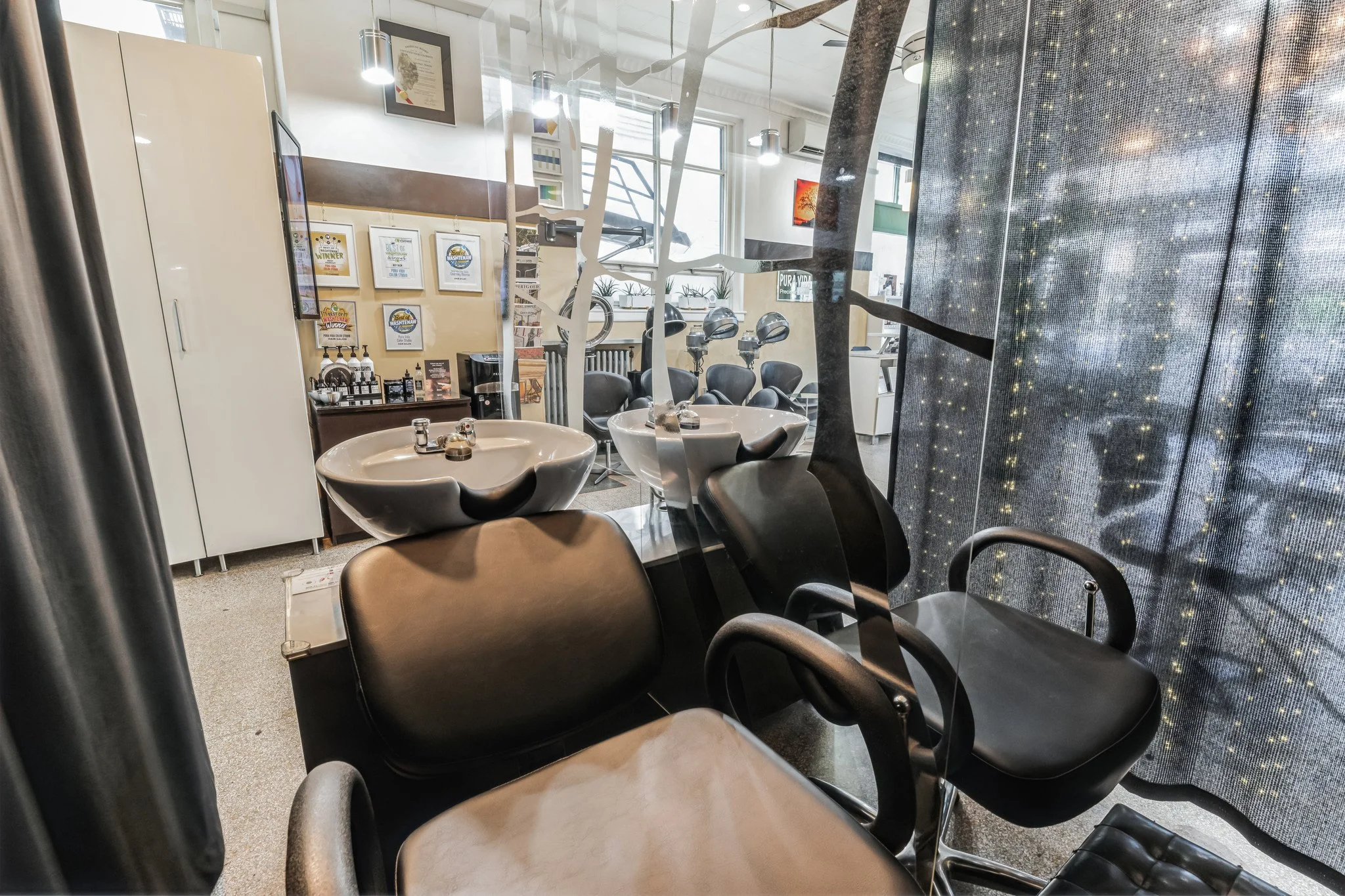
You noticed it in the shower this morning — more hair wrapping around your fingers than usual, strands snapping instead of stretching, that strange gummy texture that wasn't there six months ago. You've been coloring your hair for years, and somewhere between the highlights and the toner appointments, something shifted. So you searched for Olaplex treatment in Ann Arbor, hoping someone here actually knows what they're doing. That's exactly where Pura Vida Color Studio Hair Salon comes in. We don't just add Olaplex to a service because it sounds good on a menu. We assess your hair's actual bond damage, customize the treatment to your specific condition, and explain what we're doing and why. You'll feel the difference before you leave the chair — and understand why it's happening. That's the difference between a salon that offers this service and one that knows how to deliver it.
What Olaplex Treatment Actually Does to Your Hair
Most people in Ann Arbor come in asking about Olaplex treatment after a color service leaves their hair feeling dry or snapping off. That makes sense. But here is what sets it apart — Olaplex works at the bond level inside your hair strand, not just coating the surface like most conditioning treatments do.
Here is the plain science. Your hair is held together by disulfide bonds — tiny chemical links inside the cortex of each strand. Heat styling, bleach, color, and even hard water break those bonds apart. When enough break, your hair loses elasticity. It stretches and does not spring back. It snaps. It looks dull and feels rough no matter how much conditioner you pile on.
Olaplex contains an active ingredient called bis-aminopropyl diglycol dimaleate. That ingredient seeks out broken disulfide bonds and reconnects them. No coating. No protein layer added on top. It goes inside the strand and rebuilds the actual structure — and that is the difference between a repair treatment and a conditioning treatment. One fills in damage temporarily. The other fixes what caused the damage.
When Olaplex is applied in the salon, you can often feel the change before you even leave the chair. Hair that felt gummy during a bleach service starts to feel solid. Strands that were stretching too far when wet begin behaving normally again. That is not a styling trick. That is the bond structure rebuilding in real time.
For clients in the Kerrytown and Old West Side neighborhoods, where older home plumbing can mean mineral-heavy water, this matters even more. Hard water mineral buildup weakens the hair cuticle over time. Combine that with regular color services and you have a recipe for accelerated bond damage. A consistent Olaplex treatment plan addresses that damage directly rather than masking it.
The treatment also works across different hair types and textures. Fine hair that goes limp after color. Thick coarse hair that resists smoothing. Curly hair that loses definition after chemical services. In each case, the underlying problem is the same — broken bonds — and the mechanism of repair is the same. Olaplex reconnects those bonds regardless of your hair's natural texture or density.
Worth knowing: Olaplex does not change your hair color. It does not add volume or hold. It is not a substitute for a haircut when split ends are the issue. If your ends are already physically split apart, no bond-building treatment will fuse them back together. That damage lives above the bond level. Olaplex works on what is happening inside the strand, not at the very tip where the hair has already separated.
What you will notice after a properly applied Olaplex treatment is a change in how your hair handles over the following days and weeks. Color tends to hold more evenly because the internal structure is stable. Blowouts last longer. Curls reform more consistently because the bonds are intact and elastic again.
Many clients in Ann Arbor who have been coloring their hair for years describe the difference as their hair finally feeling like itself again. That is an accurate way to put it. When the bond structure is healthy, your hair behaves the way it is supposed to — flexible, smooth, responsive to styling. When bonds are broken, nothing you do on the outside fully compensates for what is missing on the inside. As reporting on bond-building treatments and hair repair has noted, understanding what these products actually do — versus what they are marketed to do — makes a real difference in how you use them.
That is why Olaplex treatment is not a luxury add-on for people with perfect hair. It is a repair tool for anyone whose hair has been through chemical or heat stress — which, honestly, describes most of us. Not sure whether your hair needs it? We can assess your bond damage and tell you exactly where things stand — just reach out before your next appointment.
Signs Your Hair Is Ready for an Olaplex Treatment in Ann Arbor
Your hair sends clear signals when it needs help. Knowing what to look for saves you from more damage down the road. If you live in Ann Arbor and color, bleach, or heat-style your hair regularly, these signs matter to you.
The most obvious sign is breakage. You pull a brush through your hair and see short, snapped pieces — not shed hairs with a root bulb, but broken strands mid-shaft. That breakage tells you the disulfide bonds inside your hair have been compromised. Olaplex treatment works directly on those bonds, rebuilding them from the inside out.
Elasticity loss is another clear signal. Take a wet strand and gently stretch it. Healthy hair stretches a little and springs back. Damaged hair either snaps immediately or stretches and stays stretched without returning to shape. If yours does either of those things, your hair is telling you the protein structure is weak.
Texture change is one people often overlook. Your hair used to feel smooth after washing. Now it feels rough, gummy, or almost spongy when wet. That gummy texture is a red flag — it means the cortex of the hair is compromised. Chemical services like bleaching and relaxing are common causes. Many clients who come in from the Kerrytown and Old West Side neighborhoods mention this exact feeling after back-to-back color appointments.
Porosity problems show up in a few different ways. High-porosity hair soaks up water fast but dries out just as quickly, and it grabs color unevenly — leaving patchy results after a dye job. Low-porosity hair resists moisture and product absorption altogether. Both extremes can point to structural damage that a bond-building service addresses at the root cause — literally inside the hair shaft.
Frizz that won't quit is another signal. A little frizz is normal, especially during Ann Arbor's humid summers along the Huron River corridor. But if your hair stays frizzy even after smoothing products, the cuticle layer is lifted and damaged. That lifted cuticle is not just a cosmetic issue — it means your hair is losing moisture constantly and the internal structure is exposed.
Color that fades within days of your appointment is worth paying attention to. When the hair's internal bonds are broken, the cuticle cannot close properly around the color molecule. Your color rinses out faster than it should. You end up booking more frequent color appointments, which causes more damage. It becomes a cycle. Treating the underlying bond damage first gives your color somewhere stable to hold.
Heat damage has its own look. Flat-iron or blow-dryer damage often shows as straight sections in otherwise wavy or curly hair — the curl pattern simply stops responding. If sections of your hair no longer curl the way they used to, the bonds in those sections have been permanently altered by heat. That is a strong indicator that a bond-rebuilding service belongs in your next salon visit.
One more thing to watch: how your hair responds to water. Healthy hair feels smooth and manageable when wet. Damaged hair tangles almost immediately, feels like it is matting, or has a rough, cotton-like texture. If detangling in the shower takes real effort and causes significant shedding, your hair is under stress.
If you recognize two or more of these signs, your hair is ready — and likely overdue — for a bond-building service. The longer you wait, the more the damage compounds. A professional assessment in Ann Arbor will confirm exactly where your hair stands and what level of treatment makes sense for your hair's current condition.
How to Prepare for Your Olaplex Appointment at Pura Vida Color Studio Hair Salon
Getting ready for your Olaplex treatment in Ann Arbor takes a little planning. A few small changes in your routine before the appointment can help your stylist work more effectively — and help your hair respond better to the treatment overall.
Start by skipping your wash day. Come in with hair that has not been washed for at least 24 to 48 hours. Natural oils on your scalp help protect your hair during the service. Clean hair sounds like the right move, but it actually strips away that protective layer. Dirty hair is better hair for this appointment.
Avoid heavy silicone-based products in the days before you come in. Thick serums, smoothing sprays, and certain dry shampoos coat the hair shaft and make it harder for the Olaplex bond-building ingredients to penetrate deeply. If you live in the Kerrytown area and your water is especially hard, let us know. Hard water mineral buildup can also block absorption, and we can adjust your service accordingly.
Think about your hair history before you arrive. Know what services you have had done in the last six months — color, bleach, relaxers, keratin treatments, all of it. Your stylist at Pura Vida Color Studio Hair Salon will ask about this during your consultation — our stylists are licensed cosmetologists with hands-on experience across a wide range of chemical service histories. The more honest and specific you can be, the better your stylist can customize the treatment to your actual hair condition. Bring photos if you have them. A picture of your hair at its best helps us understand your goal.
Wear comfortable, loose clothing to your appointment. Olaplex treatments take time, especially when combined with a color service — you may be in the chair for two to three hours depending on your hair length and what you are getting done. Wear something you do not mind getting a little product on. A button-up or zip-up top is always a smart choice so you do not have to pull anything over freshly treated hair.
Eat something before you come in. This sounds simple. A lot of clients skip it anyway. Long appointments are much more comfortable when you are not hungry, and starting the appointment well-fed helps you relax and stay patient through the process. We have water and a comfortable space for you here.
If you have any scalp sensitivity, skin allergies, or reactions to past hair services, mention them when you book. Do not wait until you are in the chair. Our stylists can review the product ingredients with you in advance so there are no surprises — especially helpful if you have had reactions to other bond builders or color treatments in the past. Concerns like these are exactly what the consultation is for, and we take them seriously every time.
Plan your schedule around your appointment. Avoid booking a big event the same day. Your hair will look great, but it needs a little time to settle after treatment. We recommend waiting at least 48 hours before your first wash post-service. That window is when the bonds continue strengthening on their own. Washing too soon can interrupt that process and reduce how long your results last.
Finally, come in with realistic expectations and an open mind. Your stylist will assess your hair in person and may recommend a slightly different approach than what you researched online. Hair condition varies from person to person, and what works for someone else may need to be adjusted for you. Trust the process. Our goal is to give your hair the best possible outcome every single time you sit in our chair. Ready to get this handled? We're a call away.
Ready to book your Olaplex treatment in Ann Arbor? Call Pura Vida Color Studio Hair Salon or schedule online to reserve your appointment. When you arrive, your stylist will assess your hair's condition, walk you through exactly what the service includes, and get to work. Your hair will feel different before you leave — and keep improving over the next 48 hours. Don't wait for the damage to compound. Book your appointment today and give your hair the repair it's been asking for.